Posts by Collection

portfolio

In-Cutter Sensing Technology

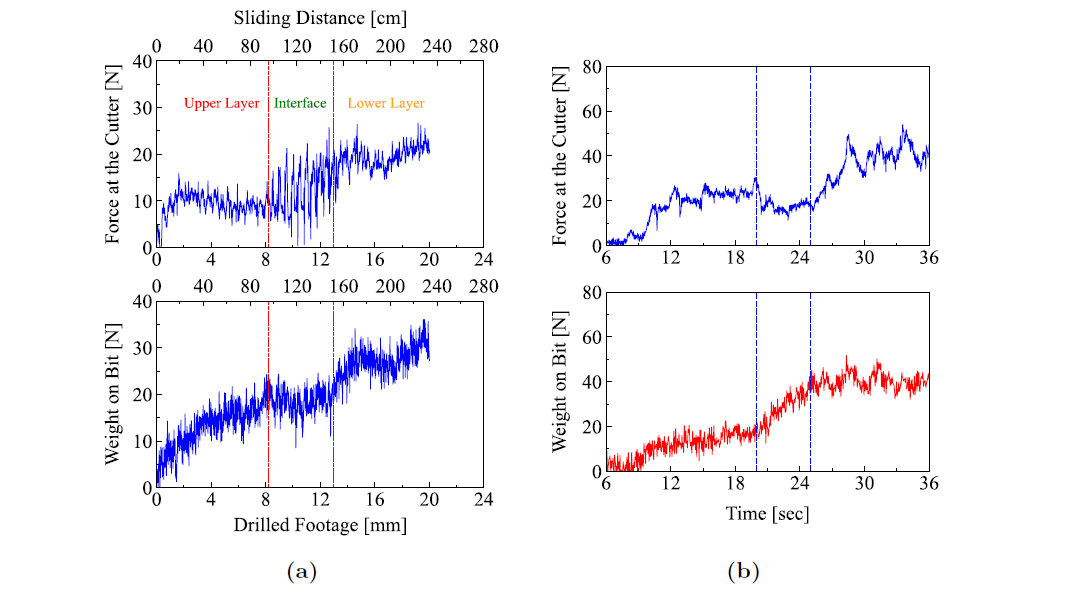
Recent advances in downhole measurement technologies enable accurate estimation of such indicators at the bit scale, thereby allowing the reconstruction of 1D formation strength logs. During my Ph.D., I investigated the rock cutting process by PDC cutters based on an extensive experimental campaign conducted on a lab-scale drilling rig, using a two-cutter drill bit, and drilling into samples of synthetic low strength rocks. Furthermore, the experiment reveals new insight into the detection of the bedding plane and its effect on the measured cutter forces that allow visualization and reconstruction of the rock layers in 3D. These experimental results indicate that the in-cutter sensing technology can provide valuable information on 3D mechanical rock properties, including heterogeneity and anisotropy. For an actual drilling environment, technology can enable stress distribution in different parts of the drill bit and allow us to extract geomechanical properties in situ.
Drilling Monitoring System

Condition monitoring of the bottom hole assembly (BHA) is crucial throughout the drilling lifecycle — from planning and real-time execution to post-job analysis. Among its components, the mud motor remains underutilized as a source of insight, even though it significantly influences downhole dynamics and drilling performance. A key research objective is to develop an intelligent monitoring framework that distinguishes torque contributions from the drill bit and the drillstring. This capability is critical for diagnosing drilling inefficiencies, such as poor hole cleaning or tight spots, and for optimizing performance. Initial results comparing surface-measured and simulated downhole torque indicate strong agreement, while deviations correlate with wellbore condition changes — highlighting the need for automated mode recognition, real-time mud motor torque estimation, and physics-informed modeling.

Wellbore Strengthening and Borehole Stability

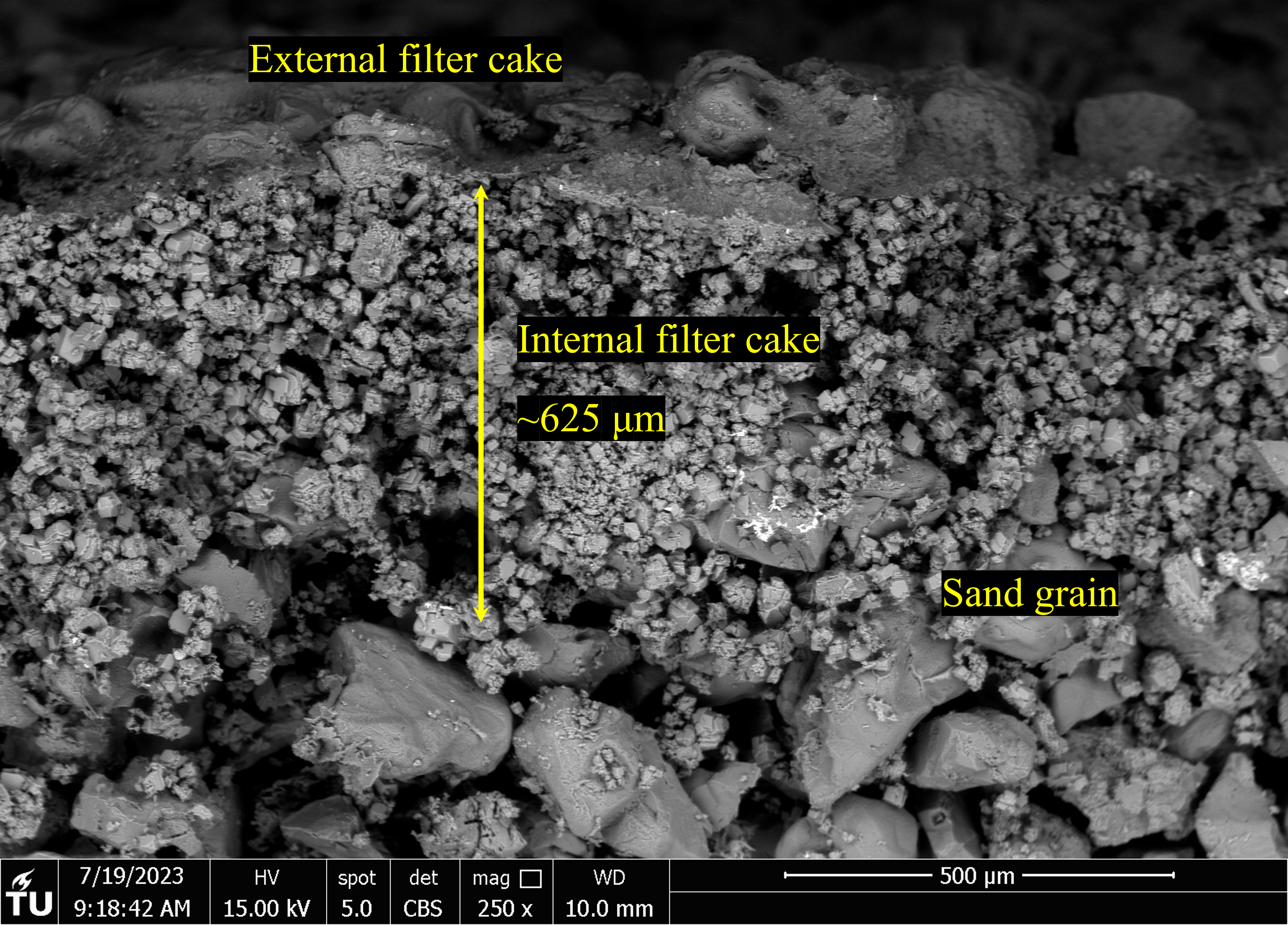
Experimental investigation of wellbore strengthening in unconsolidated formations, focusing on the role of bridging materials and drilling fluids in enhancing borehole stability. The impact on wellbore stability is evaluated using a new experimental setup in which the filtration rate is measured, followed by the use of a fall cone penetrometer augmented with an accelerometer to directly test the wellbore strengthening, and imaging with a scanning electron microscope (SEM) to investigate the (micro)structure of the filter cakes produced.

Well Integrity

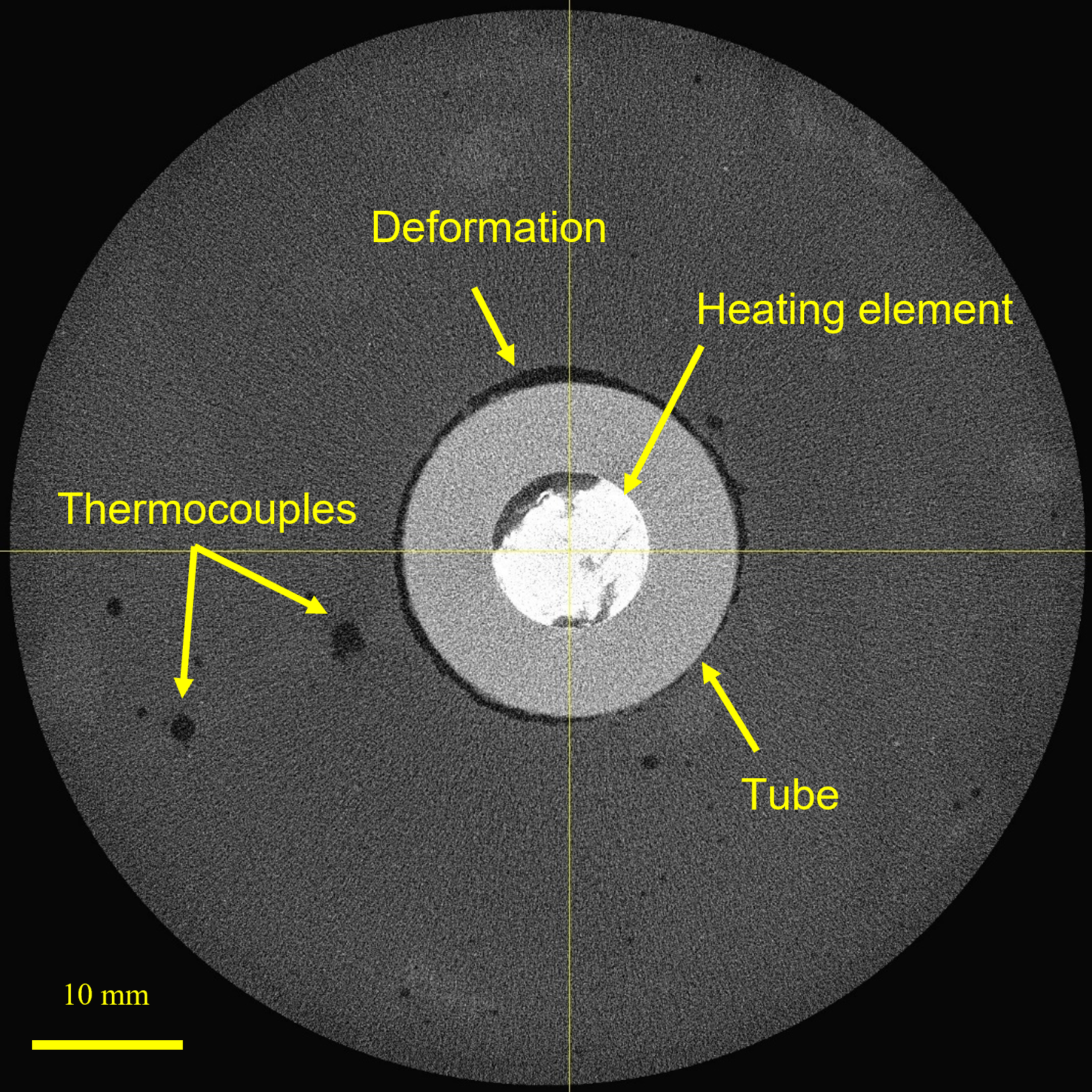
This work replicates relevant temperature-cycle scenarios in a laboratory setup for application in HT-ATES systems, i.e. high amplitude temperature cycles. The objective is to experimentally evaluate the effect of heating and cooling cycles on the sealing capacity of grout and clay pellet materials for high-temperature and low-stress conditions. To this end, a novel method is developed and tested to measure the apparent transmissivity of annular material, reflecting the sealing capacities. Measurements before and after thermal cycles, in combination with micro-CT scans, allows the determination of the extent to which the completion materials are suitable for HT-ATES.

Artificial Intelligence to Predict Drilling Efficiency and Rock Strength

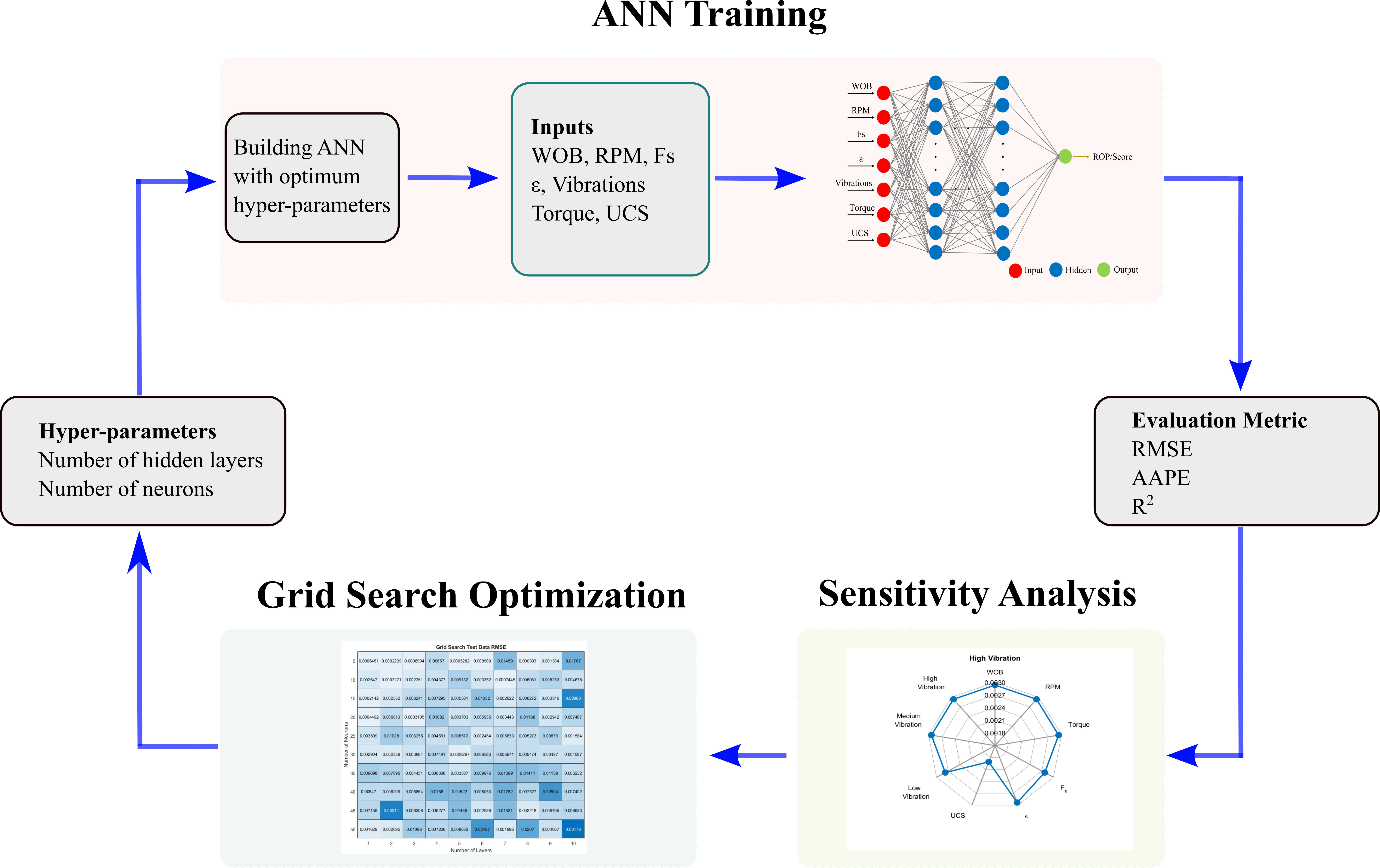
The present study considers two additional datasets: in-cutter force sensing data and vibrations. An artificial neural network (ANN) model utilizes the in-cutter sensing data and the scaled drilling rig sensors to predict the rock strength and rate of penetration. The model employs the acquired data, derived variables, and mechanical properties of the rock samples to conduct the prediction. A scoring system is used to evaluate the drilling efficiency by coupling the mechanical specific energy and vibration modes. The reliability of the framework is demonstrated by testing the validity of the ANN model on samples with various mechanical properties. A sensitivity analysis is conducted to optimize the ANN’s structure and determine the impact of each drilling parameter on the ANN’s performance. Furthermore, it is demonstrated that the ANN can produce accurate predictions for numerous rock samples.

Drilling Predictive Simulator

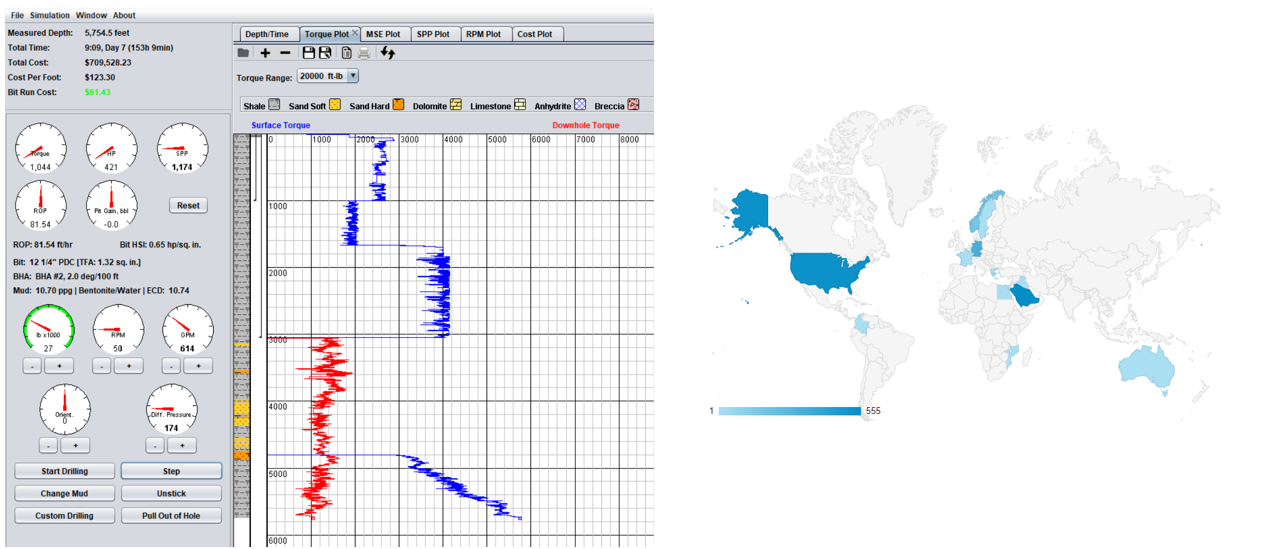
Development of a dynamic drilling simulator for advanced training and research applications. The platform was further developed from an existing framework to incorporate analytical models for rate of penetration (ROP), torque, mechanical specific energy (MSE), and bottom hole assembly (BHA) configurations, including mud motor systems. The simulator enables both rotating and sliding drilling modes and integrates data-driven drilling analytics to evaluate performance and efficiency. A key advancement is the implementation of fully dynamic simulations, where instantaneous changes in drilling parameters directly affect ROP, torque, standpipe pressure (SPP), and other key variables in real time. This capability allows realistic representation of drilling operations and supports optimization, decision-making, and training in complex drilling scenarios. Five universities have utilized it, with up to 70 licenses functioning per day.

publications

Paper Title Number 4

Published in GitHub Journal of Bugs, 2024

This paper is about fixing template issue #693.

Recommended citation: Your Name, You. (2024). "Paper Title Number 3." GitHub Journal of Bugs. 1(3).
Download Paper

talks

teaching

Teaching experience 1

Undergraduate course, University 1, Department, 2014

This is a description of a teaching experience. You can use markdown like any other post.

Teaching experience 2

Workshop, University 1, Department, 2015

This is a description of a teaching experience. You can use markdown like any other post.